Banana Nutrition Facts Infographic for Modern Branding Graphics
As a seasoned brand designer and content marketer, I recently reviewed the Banana Nutrition Facts Editable Vector Infographic for integration into a real marketing campaign. The project involved launching a new line of organic snack bars for a small wellness startup looking to build a strong visual identity across packaging, social media, and digital assets. This infographic immediately stood out as a versatile and professional design asset that could support multiple use cases without compromising on style or clarity.
A Clean Design That Communicates Health and Simplicity
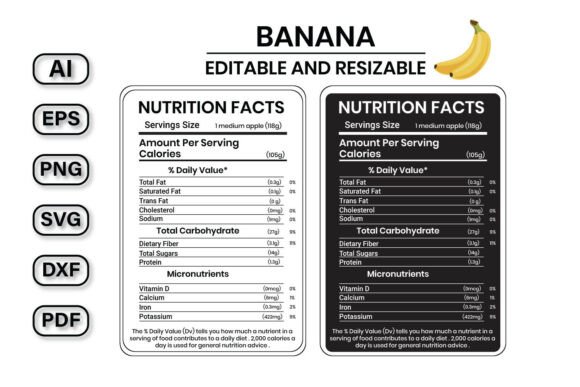
The first impression from the Banana Nutrition Facts Editable Vector Infographic was one of calm professionalism and approachability. Its flat style is modern yet timeless, which makes it ideal for health-focused brands aiming to communicate transparency and simplicity. The layout is intuitive, with clear sections for calories, macronutrients, vitamins, and minerals. It evokes a sense of trust, something essential when marketing food products or dietary supplements.
From an emotional tone perspective, this graphic leans casual but never feels unpolished. It works well for lifestyle content and handmade product branding, where warmth and authenticity are key. However, it also has enough structure and clean lines to fit seamlessly into premium visuals, especially in the context of product packaging and editorial graphics.
Flexible Use in Diverse Marketing Applications
One of the most appealing aspects of the Edit Banana Nutrition Facts Label Vector Template is its adaptability. Whether you're designing a Canva template for a client’s Instagram post or creating high-quality printables for a blog post about healthy eating, this asset can be modified easily to suit your needs. The light and dark versions offer flexibility for different backgrounds and platforms, ensuring the graphic remains legible and aesthetically consistent across channels.
In our case, we used the infographic in three primary ways:
- Packaging inserts – We embedded it directly into the nutritional label section of the snack bar box, reinforcing the brand’s commitment to transparency.
- Social media graphics – We created a series of Instagram posts using the dark version, which contrasted nicely with bright, natural photography of the product.
- Digital ads – For Facebook and Google campaigns targeting health-conscious consumers, we adapted the infographic into a hero graphic that supported the product’s USP (unique selling proposition).
Supporting Stronger First Impressions and Visual Hierarchy
In visual content creation, the Banana Nutrition Facts Editable Vector Infographic helps establish a strong first impression by clearly presenting information in a structured format. The visual hierarchy is spot-on—key metrics like calories and fiber are emphasized with larger text and bold icons, while supporting details remain accessible without overwhelming the viewer.
This kind of organization is crucial for content creators who need to balance aesthetics with functionality. The infographic doesn’t just look good; it serves a purpose by quickly informing the audience, which enhances their perception of the brand's credibility and attention to detail.
Consistency Across Campaigns and Platforms
Visual consistency is the backbone of effective branding. With the ability to edit vector paths and colors, this infographic becomes a powerful tool for maintaining a cohesive brand identity. In our workflow, we adjusted the color scheme to match the startup’s existing logo and packaging, making the design feel like a natural extension of the brand rather than an afterthought.
We also found that it paired well with various font styles, including both sans-serif and serif typefaces. When combined with a soft script font for headings, it added a touch of personality while still keeping the overall message professional. This adaptability ensures that even if your brand voice changes slightly across platforms, the core visual element remains aligned and recognizable.
Where This Asset Shines Brightest
The Banana Nutrition Facts Infographic excels in scenarios where clean, informative visuals are needed without clutter. Here are some of the best applications we tested:
- Hero graphics – Used in web banners and landing pages, it helped break up dense text and highlight the product’s health benefits.
- Content bundles – Included in a downloadable resource pack for nutrition bloggers, it added value to the bundle while staying on-brand.
- Promotional banners – For email campaigns promoting the seasonal launch, the infographic served as a focal point that improved open rates and engagement.
- Editorial layouts – Placed within a blog post comparing fruit-based snacks, it enhanced readability and provided quick reference points for readers.
Its flat design aesthetic also made it easy to integrate into merchandise designs, such as reusable snack bags and branded stickers, adding a subtle educational element to otherwise decorative items.
Limitations and Strategic Considerations
While the Banana Nutrition Facts Editable Vector Infographic is incredibly useful, there are situations where it might not be the best fit. For formal corporate branding projects, especially those requiring heavy data visualization or complex charts, the minimalist nature of this asset could appear too simplistic.
Additionally, since it includes several text elements, it may not perform well in very small mobile graphics unless the typography is scaled appropriately. We had to test how it looked at thumbnail sizes to ensure it didn’t lose its effectiveness in digital ads or Pinterest pins.
Another consideration is the background contrast. On low-contrast surfaces, the infographic’s subtlety can get lost. Always check how it looks against your brand’s color palette in black and white, as well as in full color, to maintain visibility and impact.
Practical Tips for Real-World Application
Here are some actionable insights I gathered during the review process:
- Test it with your brand palette – Swap out default colors to see how it aligns with your brand’s visual language.
- Check black and white usage – Especially important for print materials or grayscale displays where color plays no role.
- Place it in campaign mockups – See how it functions alongside other design elements before finalizing any visuals.
- Preview on mobile screens – Ensure that the infographic remains readable and visually balanced on smaller devices.
- Compare against competitor visuals – Benchmark it against similar assets in the creative marketplace to gauge its uniqueness and effectiveness.
- Experiment with font pairings – Try combining it with display fonts, handwritten styles, and scripts to find the right tonal balance for your brand.
- Review spacing and balance – Make sure the infographic doesn't disrupt the flow of the design, especially when placed in tight compositions.
- Confirm commercial licensing – Before using it in paid campaigns or for clients, always verify that the asset comes with appropriate commercial rights.
Conclusion: A Valuable Addition to Your Design Toolkit
Overall, the Banana Nutrition Facts Editable Vector Infographic proved to be a valuable graphic design asset for our wellness campaign. It helped us build stronger audience trust through transparent communication and contributed to better engagement due to its clean and memorable presentation.
For content creators, marketers, and small business owners, this infographic is more than just a visual—it’s a strategic component that supports clearer storytelling and reinforces brand messaging. It fits naturally into content marketing efforts, whether you're building a digital product, preparing a lead magnet, or designing packaging inserts.
However, it's important to understand where it should be used carefully. Avoid placing it in overly minimal designs where it might clash or in text-heavy ads where it could compete for attention. Instead, let it shine as a supporting element in campaign headers, product labels, or editorial graphics where it adds both function and flair.
If you're working on a project related to food, fitness, or health, consider adding this infographic to your design bundle. It’s a simple yet impactful asset that can elevate your marketing visuals and help you stand out in a crowded market.